
Trademark Specimens
Have you received a Notice of Allowance?
This means the USPTO has initially approved your trademark, and no one successfully opposed it during the publication period. However, your trademark is not registered yet.
To complete the process, you must submit proof that your trademark is actually being used in commerce. This is called a Statement of Use or Amendment to Allege Use.
Your evidence must show the trademark being used with the exact goods or services listed in your application.
Mockups, AI-generated images, edited photos, “coming soon” pages, pre-order pages, or products that are not actually available for sale will generally not be accepted by the USPTO.
Next Steps
You must provide specimens showing real use of your trademark.
For goods, the trademark should appear exactly as filed on the product, packaging, label, tag, or a webpage where the product is available for purchase.
For services, the trademark should appear exactly as filed on marketing or advertising materials that clearly describe the services being offered.
Simply placing the word, logo, or slogan on a website is usually not enough. The evidence must show a clear connection between the trademark and the goods or services in your application.
Please review the examples below before submitting your evidence.
Specimens for goods
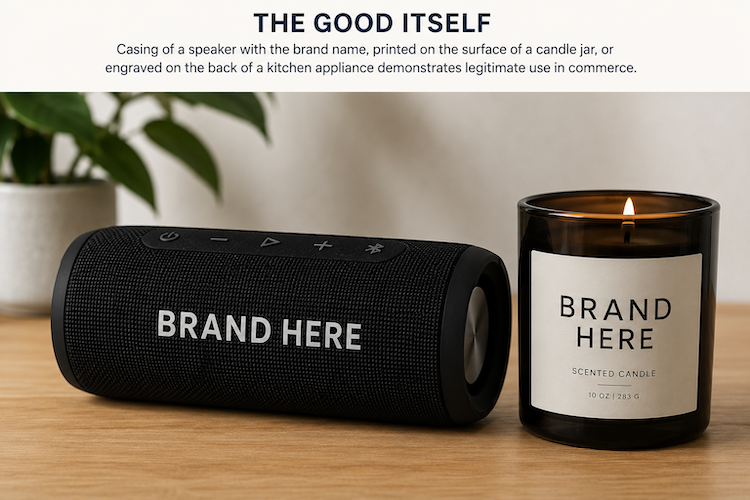
The goods themselves
For example, you could submit a photo showing your trademark for a speaker on the speaker, or on a candle for a candle.
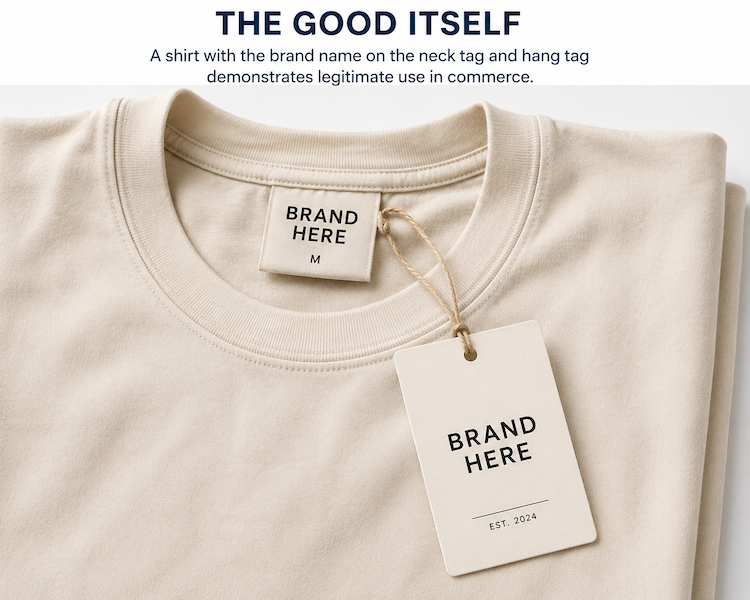
Labels and tags for the goods
For example, you could submit a photo showing your trademark on a label sewn on the neckband of a t-shirt, a photo of the goods showing your trademark on a label.
Packaging for the goods

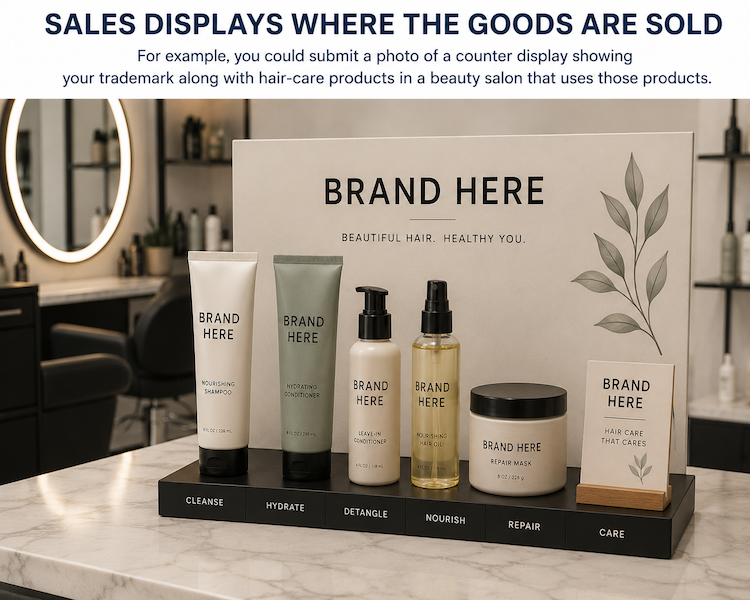
Sales displays where the goods are sold
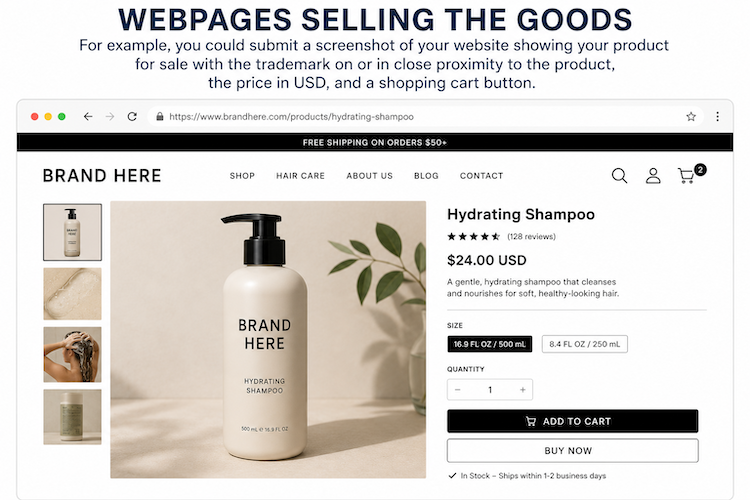
Webpages selling the goods
Specimens for services
Online advertising or printed matter showing a direct link association between your trademark and the services
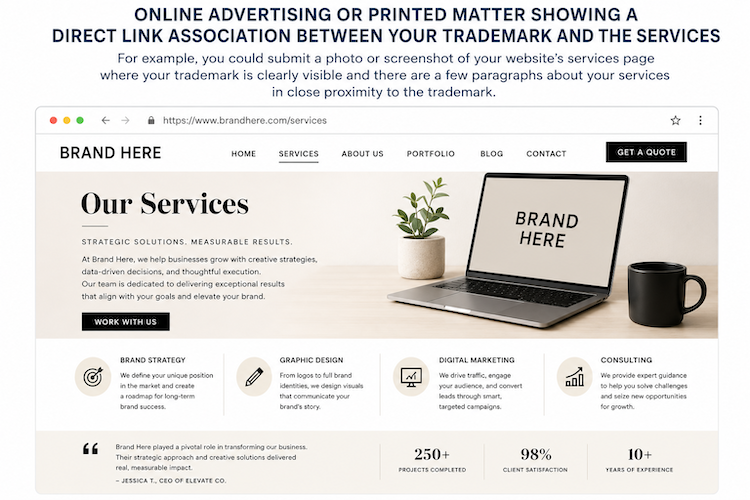
Marketing material showing a direct association between your trademark and the services

Signage where the services are rendered
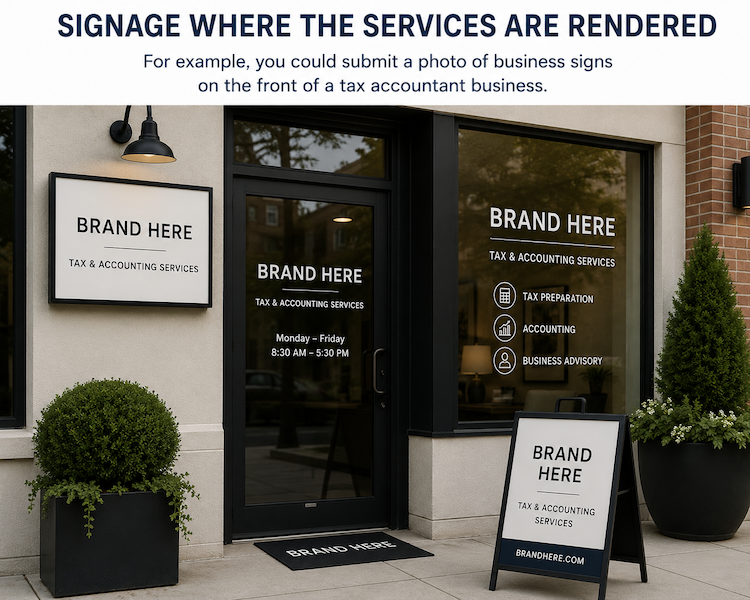
Material used in the providing/rendering of the services.
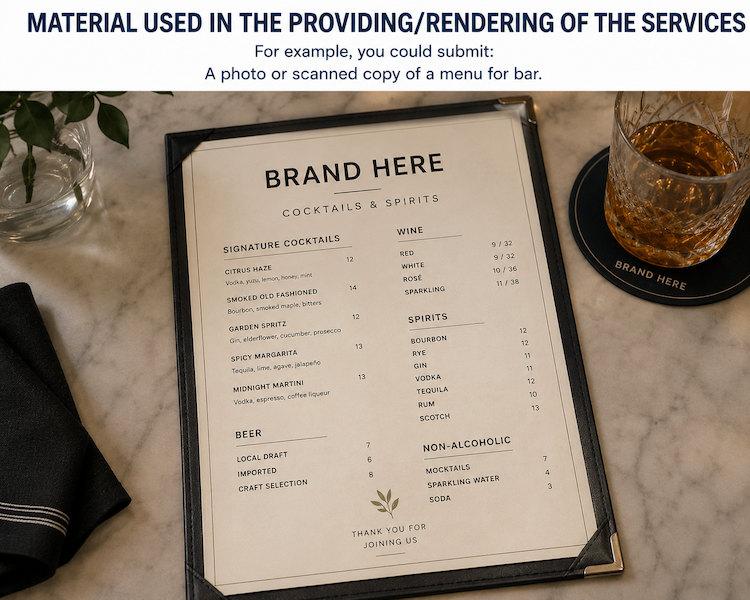
You could also submit:
A photo of a band performing on stage with the band's name displayed during the performance (example: the band’s name on the band's drum) for live musical entertainment services.
A screenshot of the title and launch screens for ongoing television programs and video game entertainment services.
Business cards and letterhead showing a direct association between your trademark and the services

Need more time?
If you have not yet used your trademark in commerce, meaning you are not offering the services or products on your application in connection with your trademark, then you have approximately 6 months to begin using the trademark in commerce from the date you filed the application. If 6 months from filing is not enough time to start using your trademark, you have up to 3 years, in 6-month increments to provide evidence. You will need to file for an extension every 6 months, however, you should not wait until the last minute to file the extension. The government fee for each extension is $200.
If you have any questions, comments, or concerns, please reach out to me here.
Sources:
TMEP 904 specimens for goods
TMEP 1301.04 specimens for services